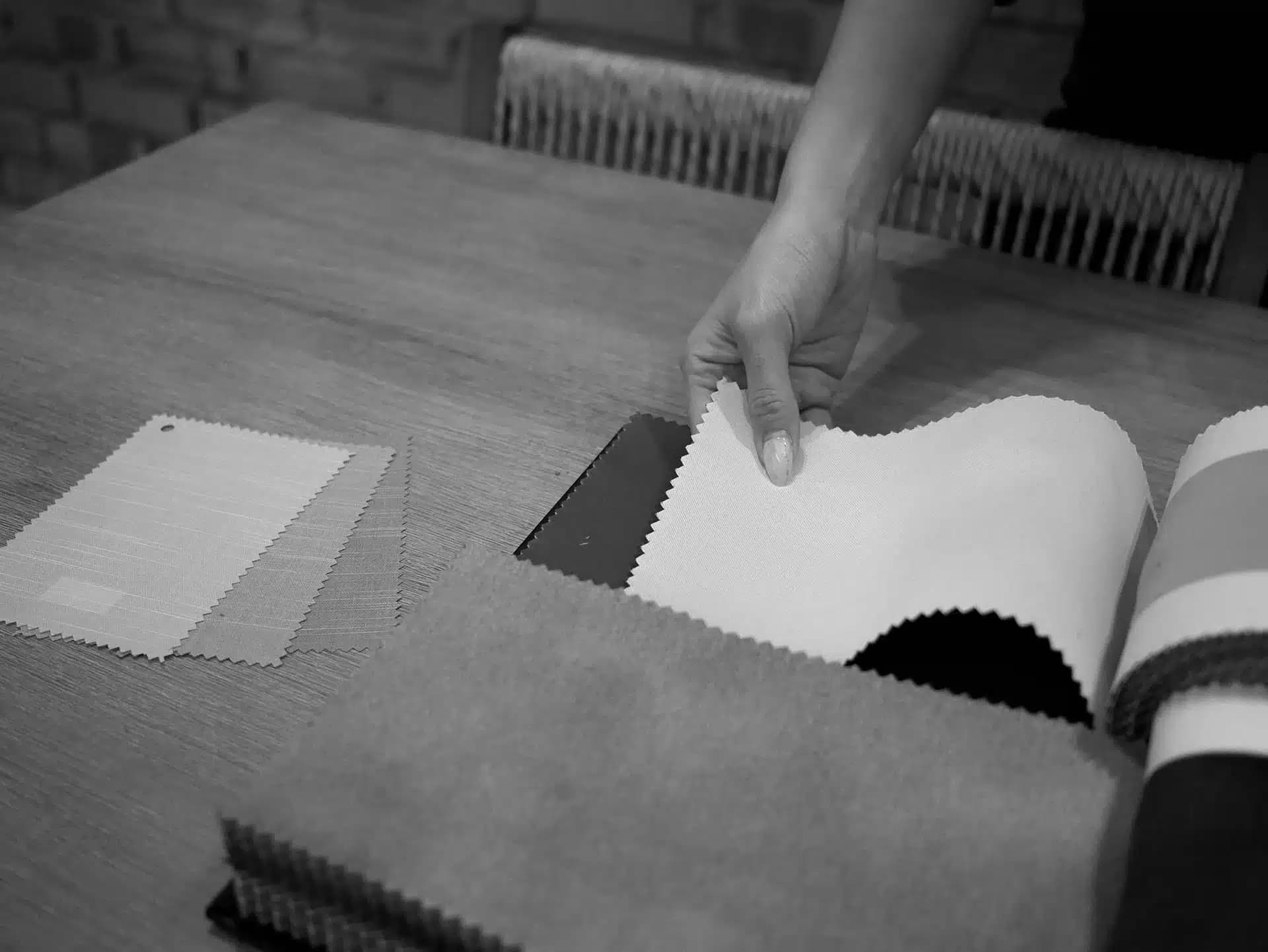
In Singapore, day curtain and sheer curtain usually describe the same functional layer: translucent fabric that softens daylight and the view into a home during brighter daytime conditions. Day curtain describes the job; sheer describes the fabric.
Why both names are used
A showroom may call the material a sheer because of its open, translucent construction. A homeowner may call it a day curtain because it is the layer left closed during the day. Neither term guarantees a particular weave, colour, fullness or privacy level.
Some sheers are fine and gauzy, while others are textured or relatively dense. Those differences affect how the fabric hangs, how clearly a view passes through it and how much visual screening it provides.
What a day or sheer curtain does well
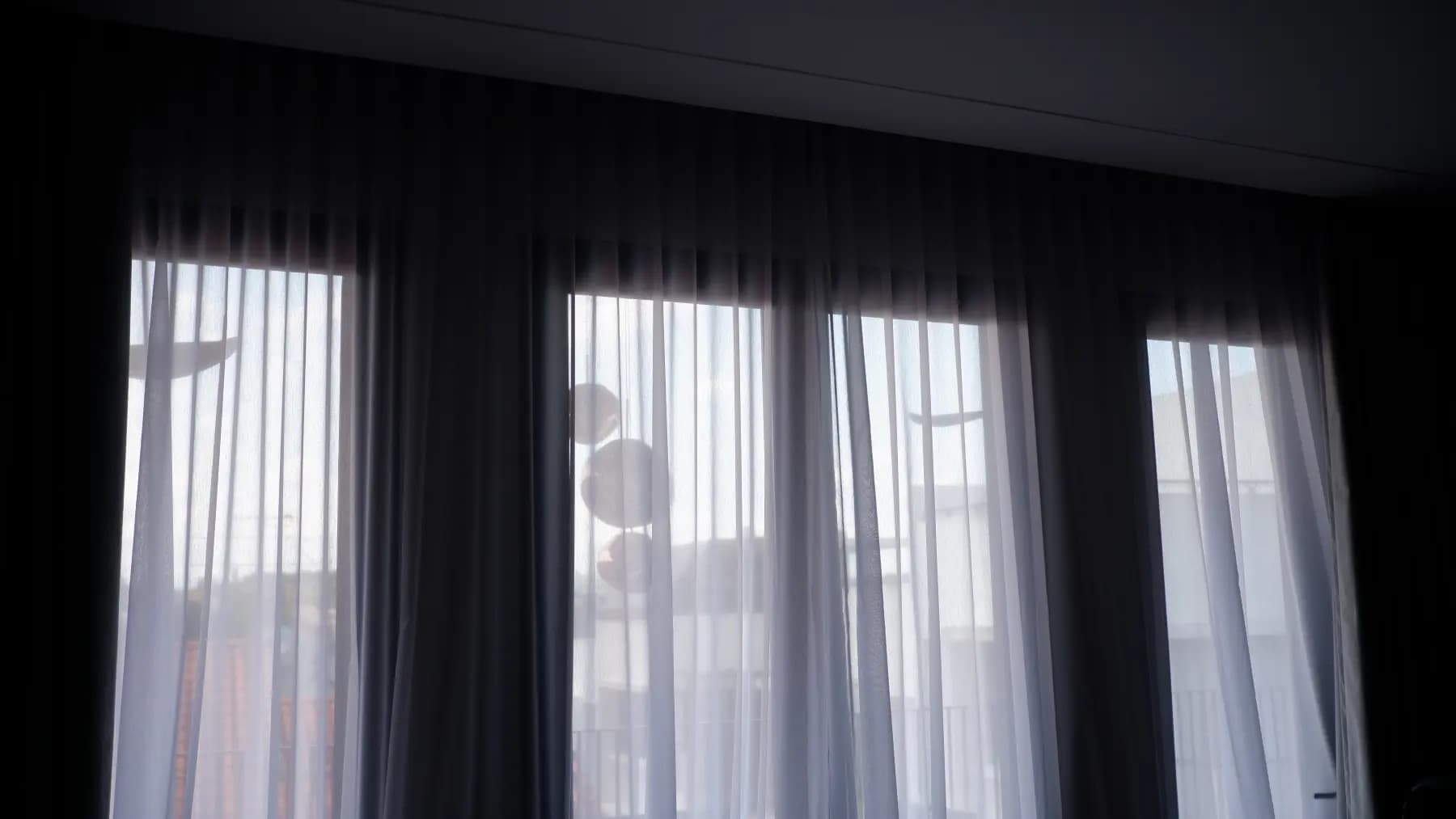
- Diffuses bright daylight: the weave softens sharp contrast and glare without turning the room into a dark enclosure.
- Softens direct views: during brighter outdoor conditions, it makes the interior less immediately visible.
- Adds fabric texture: full-height sheers can make the window wall feel softer and more continuous.
- Creates a daytime layer: it can remain drawn while a heavier night curtain stays stacked open.
What changes after dark
Sheer curtains do not provide dependable night privacy. Once the room is lit and the exterior is darker, the brighter side becomes easier to see. A weave that screened the room during the day may reveal silhouettes or considerably more after sunset.
If after-dark privacy matters, plan an opaque night layer such as a dimout or blackout curtain, or a suitable blind, rather than relying on the sheer.
Day curtain, night curtain or both?
| Configuration | During the day | After dark | Useful when |
|---|---|---|---|
| Sheer only | Filtered light and softened views | Limited privacy when the room is brighter | The room does not require night coverage |
| Night curtain only | Reduces more light but lacks a lighter intermediate mode | Stronger privacy when fully closed | A simple one-layer arrangement is preferred |
| Sheer plus dimout | Soft daylight from the sheer layer | Substantial coverage from the night layer | Flexible living areas and bedrooms |
| Sheer plus blackout | Soft daylight from the sheer layer | Stronger darkening intent, with edge gaps still relevant | Bedrooms where sleep and light reduction are priorities |
How the room changes the decision
Living and dining areas
A sheer-only treatment can preserve a bright, open character where evening privacy is not a strong concern. If the window faces another block or a busy exterior space, a separate dimout layer can provide a more private evening mode without changing the daytime appearance.
Bedrooms
Bedrooms usually need after-dark privacy and may also need stronger morning light reduction. Plan the sheer as the daytime layer and judge the night curtain separately. Centre overlap, side returns and top coverage matter alongside the chosen dimout or blackout fabric.
Studies and workspaces
A sheer can soften a bright background, but it may not control a narrow beam of direct sun on a monitor. Window orientation, screen position and work hours may point to an adjustable blind behind the sheer or to a different treatment altogether.
Fullness, heading and colour still matter
Two sheer fabrics with a similar openness can look different once made into a full curtain. More fullness creates additional overlapping folds, while the heading changes how regularly those folds repeat. A pale warm yarn can soften cool daylight; a grey or coloured yarn can shift the entire window wall. These effects are best judged at hanging scale.
Does a sheer curtain block heat or UV?
A sheer can reduce direct glare and alter how sunlight reaches the room, but visual softness should not be treated as measured thermal or UV performance. Results depend on the exact material, colour, openness, glazing, orientation, coverage and time of day. Where solar performance matters, compare documented material specifications and consider the complete window assembly.
How to choose a sheer curtain
- Look through it in natural light. Assess both the outward view and the line of sight into the room.
- View it from several metres away. A small sample does not reveal the rhythm of a full-width curtain.
- Check the colour beside the interior finishes. White, warm ivory, grey and coloured yarns change the light differently.
- Choose the heading and fullness. S-fold creates even waves, while pleated headingsproduce a more tailored fall.
- Plan a second track if needed. Adding another layer later may be limited by pelmet depth, support and clearance.
Explore the full day and sheer curtain page, compare dimout and blackout curtains, or review the custom-curtain overview before choosing a system.