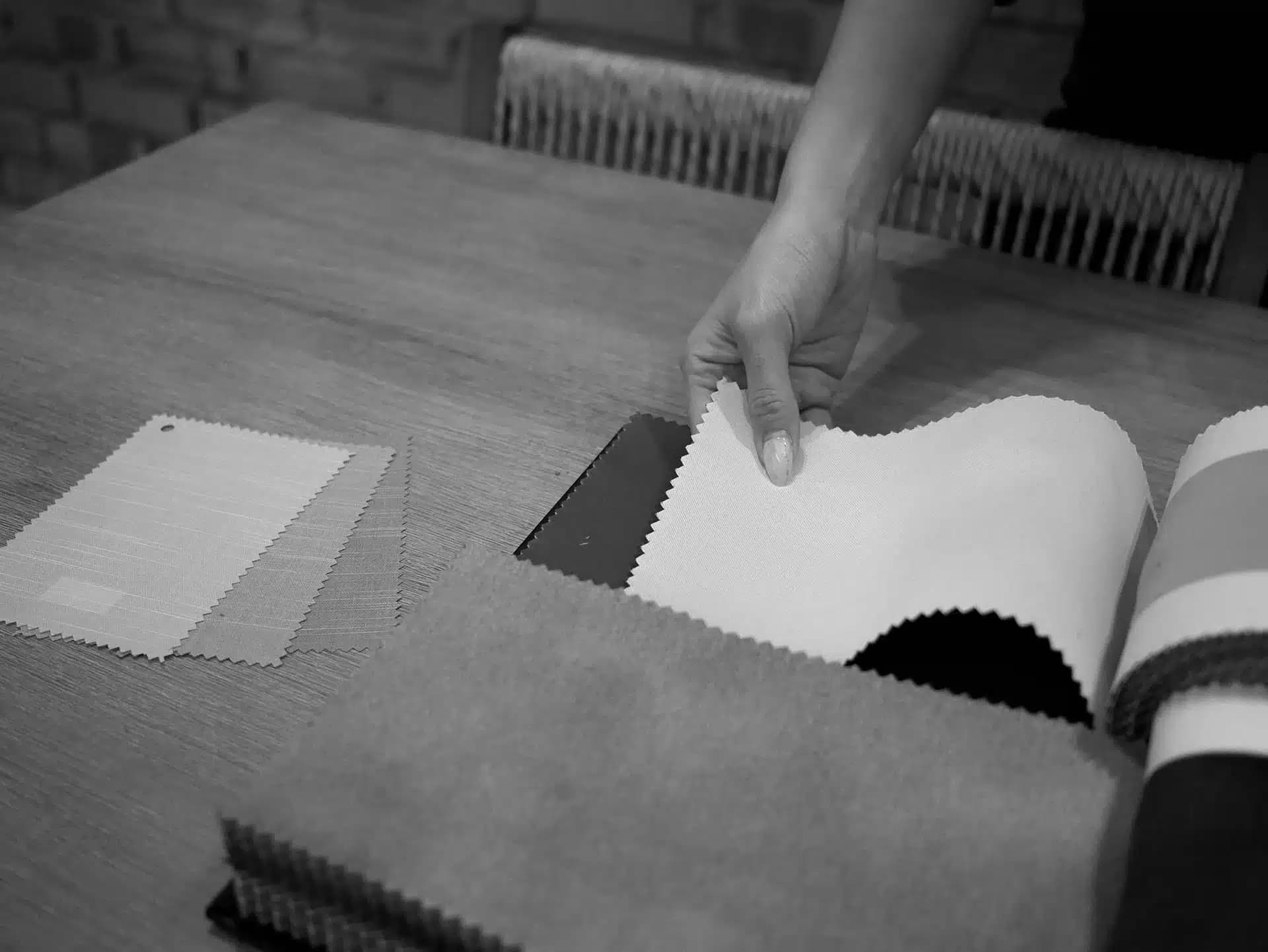
Power and access for smart curtains or motorised blinds should be planned with the selected hardware, not copied from a generic detail. Motor type, motor end, track or tube, load, controls and service access all affect the final arrangement.
Plan the sequence: choose the treatment, select a compatible motor system, confirm the motor position and manufacturer requirements, then coordinate the power provision with the relevant renovation professionals.
Motorised and smart are not the same decision
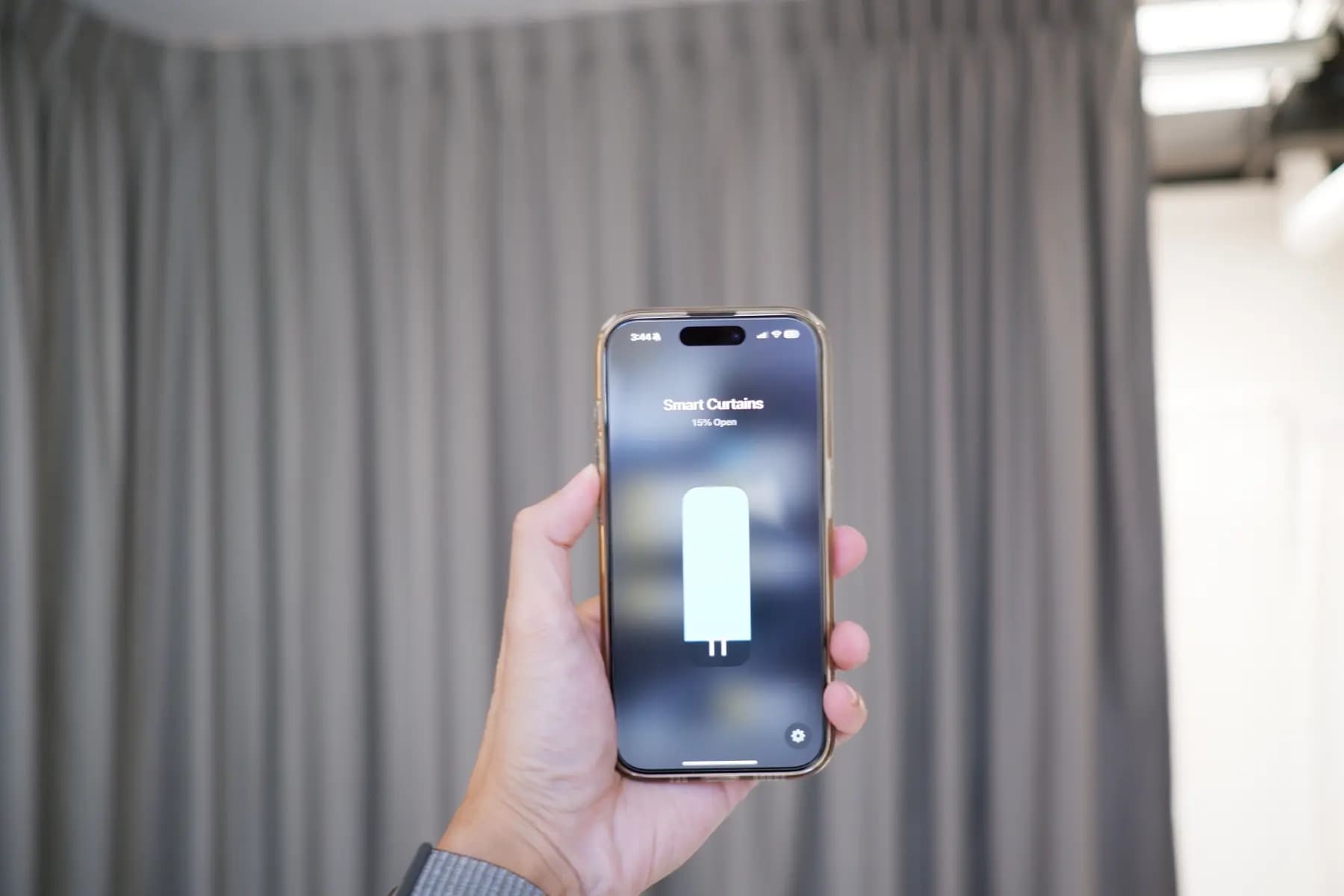
Motorisation is the powered movement itself. A motorised curtain or blind can operate from a wall switch or dedicated remote without connecting to a wider platform. Smart control adds a compatible integration layer for app control, voice assistants, schedules, scenes or sensors.
Choose the mechanical system before the app. A control platform cannot compensate for a track, roller tube or motor that does not suit the span, fabric weight and required movement.
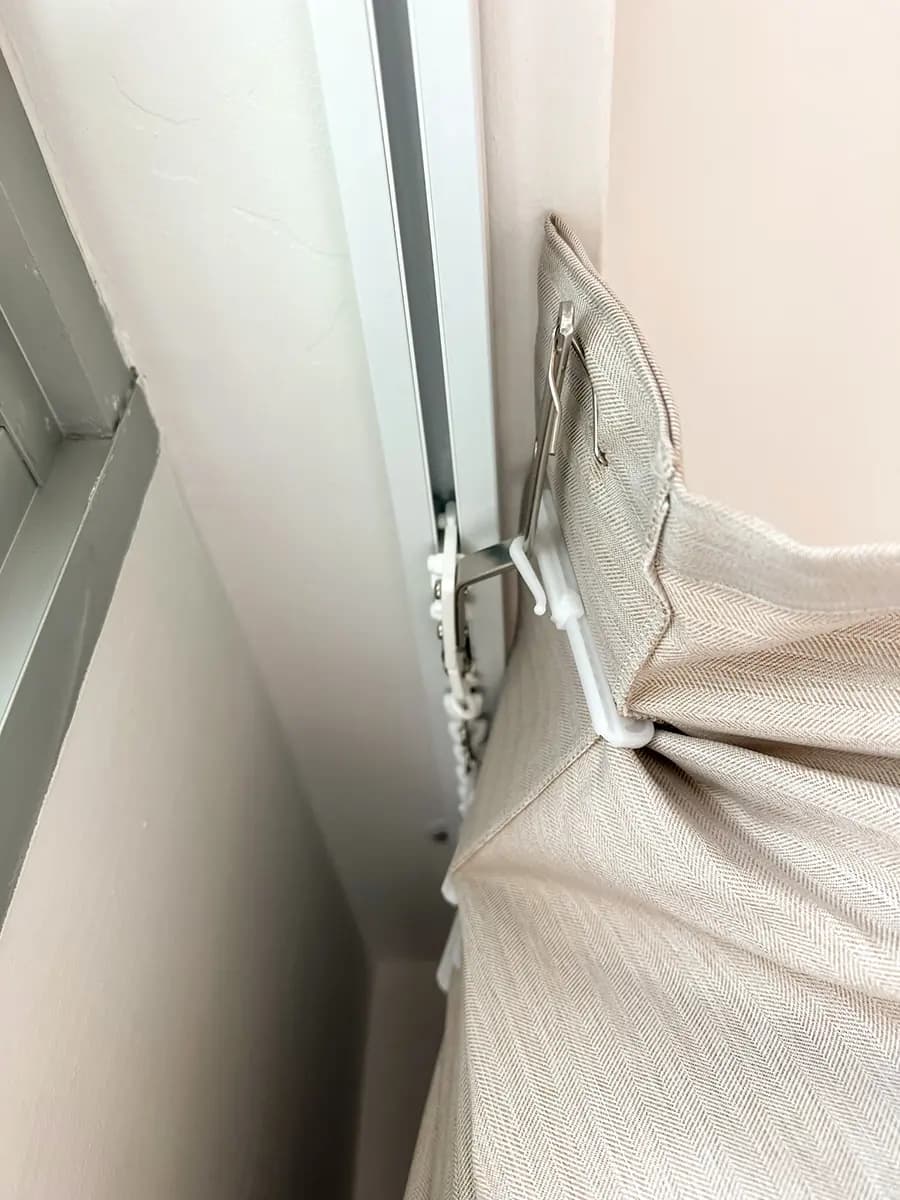
Five decisions to make before the ceiling closes
- Treatment type: curtain track, roller blind and vertical-blind hardware use different motors and mechanisms.
- Opening and motor position: decide whether curtains meet in the centre or travel to one side and where the motor can sit.
- Power method:confirm the selected system's supply, connection and isolation requirements rather than assuming one detail.
- Local controls: preserve a practical switch or remote option for guests, network interruptions and routine operation.
- Service access: keep the motor, connectors and control equipment reachable without damaging the finished ceiling or joinery.
How the treatment changes the power plan
| Treatment | Mechanical question | Access question |
|---|---|---|
| Motorised curtain | One-way or centre opening, track span and fabric load | Can the motor end and track connection be reached? |
| Motorised roller blind | Tube, blind width, material, brackets and motor capacity | Can the motor head, wiring and blind roll be serviced? |
| Motorised vertical blind | Traverse, vane rotation and the required control functions | Can the headrail and drive components be accessed? |
Plan for ordinary failures and handover
Ask what local control remains available if the home network or smart platform is unavailable, and confirm the selected system's behaviour after a power interruption. These answers vary by motor and controller, so they belong in the product handover rather than in a generic wiring assumption.
Before the renovation team closes the ceiling or carpentry, record the confirmed motor end, power provision, access panel or removable cover, track or bracket zone and responsible trade. At commissioning, label remotes or switches, test the full travel, confirm limits and explain the manual operating path to the homeowner.
Where should power be placed?
The answer depends on the confirmed motor and opening arrangement. A curtain track may place its motor at one end, while a roller-blind motor sits inside the tube. The chosen stack direction, bracket position, pelmet, nearby carpentry and access for servicing can all change which location is suitable.
Ask the curtain supplier for the requirements of the selected system, then have the renovation team coordinate the provision before work is concealed. Final electrical work should be carried out by the appropriate qualified professional.
Mains power or battery power?
| Approach | Potential advantage | Planning consideration |
|---|---|---|
| Mains powered | Consistent power for frequent operation and larger systems | Needs early coordination, suitable isolation and service access |
| Battery powered | May reduce concealed wiring for compatible smaller systems | Charging access, operating frequency, load and battery condition matter |
Availability and suitability vary by motor and treatment. Battery power should not be assumed to suit every width, fabric weight or usage pattern.
Plan controls in layers
- Direct local control: a dedicated switch or remote provides straightforward operation near the room.
- App and voice control: compatibility depends on the selected motor, controller, hub and integration method.
- Schedules and scenes: useful for repeated routines, but manual control should remain available for exceptions.
- Sensors and wider automation: treat these as an optional control layer after the physical treatment works reliably.
A coordination checklist
- Window width, drop, treatment type and expected fabric weight
- Single-side or centre opening and the intended stack direction
- Track, tube, bracket, pelmet and ceiling clearances
- Confirmed motor position and manufacturer power requirements
- Access for installation, commissioning, charging and future service
- Local remote or switch behaviour if the network is unavailable
- App, voice, scene and sensor integrations that are actually required
Review the smart blinds and motorised-curtain options first, then bring the relevant floor plan, ceiling details and window photographs to the showroom before the renovation drawings are closed.